- Best Research and Presenter
- ROOM 1
Presenter : Amar Makruf Tinulad Fil Ardli
Paper Title : Experimental Study on the Performance of an Bi-directional Impulse Turbine Under Varying Sea States in an Oscillating Water Column - ROOM 2
Presenter : Nicholas Setia Immanuel Sihombing
Paper Title : Enhancing Solar Panel Efficiency Using an ESP32-Controlled Water Spraying System - ROOM 3
Presenter : Winona Shafira
Paper Title : Socio-spatial performance of a corridor intersection in a deaf school : A Single-Case Visual Ethnography - ROOM 4
Presenter : Chime Mora-Garcia
Paper Title : Understanding Light Pollution through Awareness and Perception of Artificial Light at Night among Selected Residents in Butuan City - ROOM 5
Presenter : Muhammad Reza Pahlevi
Paper Title : Safety assessment and risk mitigation strategies for high-pressure hydrogen storage tanks in hydrogen-fueled vehicles under crash scenarios
- Best SDGs Topic
- ROOM 1
Author(s) : Oleksiy Melnyk, Mykola Bulgakov, Volodymyr Yarovenko, Oleg Onіshchenko
Paper Title : Numerical modelling of the influence of hydrodynamic characteristics on ship energy efficiency - ROOM 2
Author(s) : Faiz Imawan Danaputra, Pristian Dwi Putra, Wiwiek Hendrowati
Paper Title : Modelling and Analysis of Semi-Active Tuned Mass Damper for Vibration Control of High-Pressure Circulation Pumps and Potential Maintenance Waste Reduction Assessment - ROOM 3
Author(s) : Eksa Rusdiyana, Widiyanto, Sugihardjo, Retno Setyowati, Diwi Acita Irawati, Eny Lestari, Ninik Damiyati, Apichart Jai-aree
Paper Title : Comparative Analysis of Strategies and Implementation of the Climate Village Program (Proklim) in the Surakarta Residency - ROOM 4
Author(s) : Imawan Wahyu Hidayat, Arief Noor Rachmadiyanto, Hendra Helmanto, Danang Wahyu Purnomo, Dodo Dodo, Enggal Primananda, Fitri Kurniawati, Marfuah Wardani, Tri Cahya Widiantara
Paper Title : Purisatrian as a model of SDG-driven collaboration: Integrating threatened species conservation into corporate-state research on tropical green spaces - ROOM 5
Author(s) : Martin Jurkovič, Terézia Debnárová, Oleksiy Melnyk
Paper Title : Innovative design of an adaptive training system for inland ship crews based on performance analysis in simulated and real environments
Start in
Days
Hours
Minutes
Seconds
TC-IMSM 2026
About Conference
A Thematic Conference on Infrastructure Multi-energy Systems and environmental Management – (formerly the Thematic Symposium in 2022 and 2024) is held for the fourth time, having been first introduced in 2020. Given the high enthusiasm for participation and contribution to the structure and materials fields at the previous event, the symposium format in 2026 will be changed to a biannual conference with DIMONITOR© as the Host. Advanced development in structure-related fields is also significantly contributing to the compliance of technology in energy-related infrastructure and design. International collaborations between countries, such as those between the global north and the global south, are expected to yield significant progress toward achieving the Sustainable Development Goals (SDG 17 – Partnership for the Goals).
Where
Surakarta, Indonesia
Online in ZoomMeeting
When
1st – 2nd June 2026
Conference Format
Oral – Virtual Presentation
The conference’s core scope delves deeply into the multifaceted challenges and opportunities presented by each scope:
- Earth and Environmental Science (SDGs 13, 14, and 15)
- Green Energy and Engineering (SDGs 6 and 7)
- Sustainable Life and Infrastructure (SDGs 9 and 11)
The central theme of structure-energy collaboration towards sustainable societies, reflecting achieved SGDs, is raised as the main agenda in TC-IMSM 2026. In practice, SDG implementation relies on measurable indicators, evidence-based policy, and cross-sector collaboration to align technological innovation, infrastructure planning, and resource management with long-term sustainability targets. Within engineering and scientific research, the SDGs function as a strategic lens to prioritize low-carbon technologies, circular material use, disaster-risk reduction, and equitable access to essential services, while also supporting transparent monitoring and accountability through standardized reporting and life-cycle thinking.
This event is supported by the Indonesian Endowment Fund for Education (LPDP) on behalf of the Indonesian Ministry of Higher Education, Science and Technology.
The funding is managed under the EQUITY Program of Universitas Sebelas Maret, within the Hibah International Research Network Program EQUITY THE Impact Rankings 2025.
Conference Scope
Aims & Scopes
Earth and Environmental Science
- Geotechnical Engineering & Ground Improvement
- Water Resources & Hydraulics
- Environmental Pollution Control & Remediation
- Pollution Management & Circular Economy
- Coastal & Ocean Environmental Engineering
- Climate Change Adaptation & Disaster Risk Reduction
- Remote Sensing, GIS, & Environmental Monitoring
Green Energy and Engineering
- Renewable & Bio-based Energy
- Recycling, Upcycling & Circular Energy Design
- Energy-Efficient Energy for Buildings
- Green Manufacturing & Sustainable Processing
- Advanced Energy for Clean Energy Systems
- Environmental Remediation Energy
- Risk Assessment & Hazard Control Technology
Sustainable Life and Infrastructure
- Occupational Health & Safety (OHS) Systems
- Life Cycle Assessment (LCA) & Sustainable Infrastructure Metrics
- Industrial Hygiene & Exposure Monitoring
- Ergonomics & Human Factors
Emergency Preparedness & Incident Response - Incident Investigation & Safety Performance Metrics
- Natural Resources and Conservation Infrastructure
Event Schedule
Important Dates
Period 1 : 28 April 2026
Period 2 : 27 May 2026
Period 2 : 27 May 2026
Abstract submission deadline
Deadline for abstract submission
Period 1 : 4 May 2026
Period 2 : 28 May 2026
Period 2 : 28 May 2026
Notification of acceptance
Notification for the selected papers and presentations
Period 1 : 18 May 2026
Period 2 : 29 May 2026
Period 2 : 29 May 2026
Registration deadline
Deadline for the final payment
Period 1 : 25 May 2026
Perido 2 : 30 May 2026
Perido 2 : 30 May 2026
Video Presentation (mp4) submission deadline
Deadline for the video presentation
1-2 June 2026
Conference dates
15 June 2026
Full Paper submission deadline
These Are
Keynote Speakers
Tiago Fazeres-Ferradosa
University of Porto, Portugal
Nguyen Thanh Phuong
Nha Trang University, Viet Nam
Pavlo Nosov
Odesa National Maritime University, Ukraine
Aldias Bahatmaka
Universitas Negeri Semarang, Indonesia
Haris Nubli
University of Surrey, United Kingdom
Nguyen Thanh Phuong
Nha Trang University, Viet Nam
Godlisten Gladstone Kombe
University of Dodoma, Tanzania
Haris Nubli
University of Surrey, United Kingdom
TC-IMSM 2026
Accepted Manuscript Types
The submitted paper has to be written in well-English language with page range is set below which the template/guideline refers to Instruction for Author. Please note that poor English writing and missed-formatting may lead to rejection in final screening by Editors.
The accepted paper formats and draft length approximation (including reference list):
- Short communication – max. 8-10 pages
- Mini review – max. 8-15 pages
- Systematic review – more than 15 pages
- Full-length article – more than 15 pages
Conference Publication
Publication Opportunity
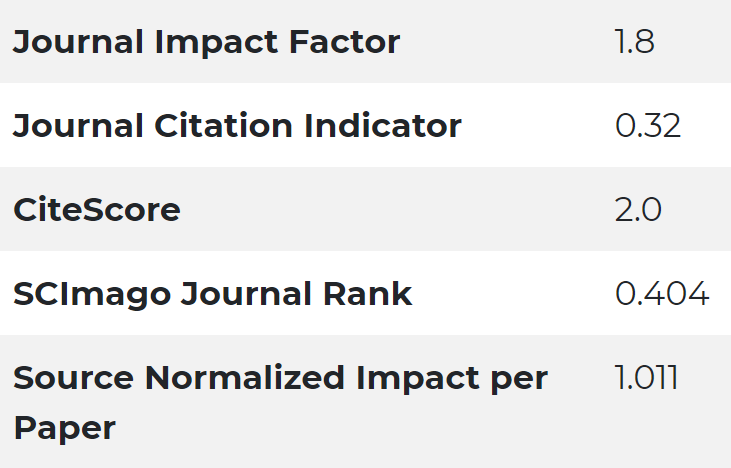
The 4th TCIMSM 2026 has successfully secured a publication agreement with IOP Conference Series: Earth and Environmental Science (IOP-EES), indexed by Scopus
The publication is scheduled in Quarter 1, 2027 (https://publishingsupport.iopscience.iop.org/ees-forthcoming-volumes/)

Collaborating Partners
Collaborating Partners